“I’ve Been In Love With the Ponduru Khadi Weave Since My Wedding”

Sobhita Dhulipala speaks about her love for saris as the new brand ambassador of Aadyam Handwoven.

Actor Sobhita Dhulipala is the new brand ambassador of Aadyam Handwoven, an Aditya Birla Group corporate social enterprise. She wears a double Ikat weave by the brand.

Sobhita was made for the sari…the Kanjeevaram, Uppada silk, Baanarasi, chiffon. And over the years, the 33-year-old actor has embraced the nine yards as a delightful extension of her personal style. We saw her decked in wedding finery last year, and before, at the airport in a simple sari the papz couldn’t get enough of. But this is more than an affectation or even an infatuation; Sobhita’’s love for the woven fabric is evident across her journey.

For her birthday in Amsterdam in 2024, she made it the dress code, and those who didn’t wear the sari had to pay up. At her wedding that same year, with actor Naga Chaitanya, Sobhita was radiant in handwoven drapes from across the south of India.

Then, in December 2025, she was appointed as the brand ambassador for Aadyam Handwoven, an Aditya Birla Group corporate social enterprise, to celebrate the weaves of rural artisan weavers and draw in the younger, conscious consumer. This is the perfect fit.

8
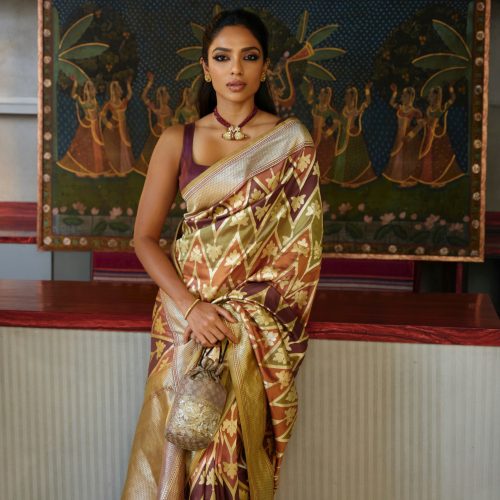
Sobhita wears the Rangkaat sari of Banaras, by Aadyam Handwoven

“I am fascinated by the sensuality of drapery. It is formless, while still being an extension of you… How beautiful is that!” Sobhita tells The Word. Magazine, as we discuss her views on the many avatars of the sari. “I think every Indian is introduced to textile from a young age, right at our homes, through the everyday moments of our lives. My own initiation, however, only happened a few years ago, which is when I truly fell in love with it,” she explains.

Ever since, Sobhita has turned into “a bit of a nerd”, as she has been “reading up on all the types of saris there are in the country, and learning more about their history and techniques”, she shares. The crafts of different regions fascinate her, and in a special shoot for Aadyam Handwoven, she celebrates a wide range of textiles.

2
Sobhita in the Bhuj sari by Aadyam Handwoven

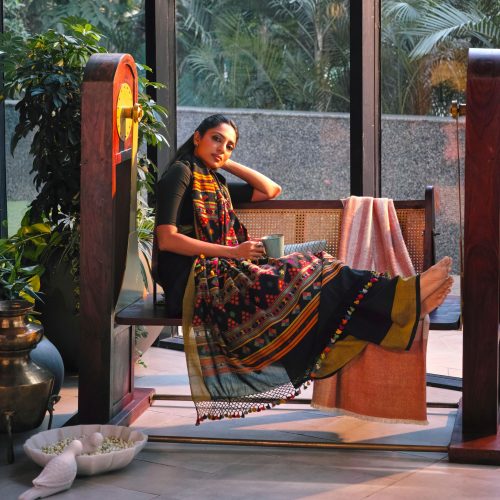
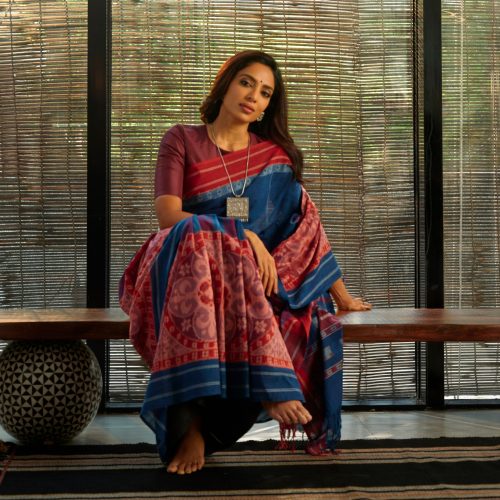
While speaking with The Word. Magazine, Sobhita is dressed in an elaborate, embroidered drape from Bhuj, which highlights abstract, geometrical shapes on the pallu. In another look, she lounges in a natural dye Ikat sari, in earthy shades of red and blue, reminiscent of the ’90s when the sari was equally a uniform and a fashion statement.

“I feel my best, my most confident self in a sari,” she lets in. “In fact, I sometimes randomly drape a sari at home, just to feel more at home with myself.” And it makes sense—much like the Aadyam Handwoven philosophy, these textiles celebrate identity, carry memory, and evoke artistry. They’re symbols of craft and modernity, at once. “India really is high couture, in terms of the craft we have,” Sobhita shares. “I strongly believe it should be more than just heritage—it should be a part of our daily living.”

7
The actor wears a natural dyed Ikat sari by Aadyam Handwoven

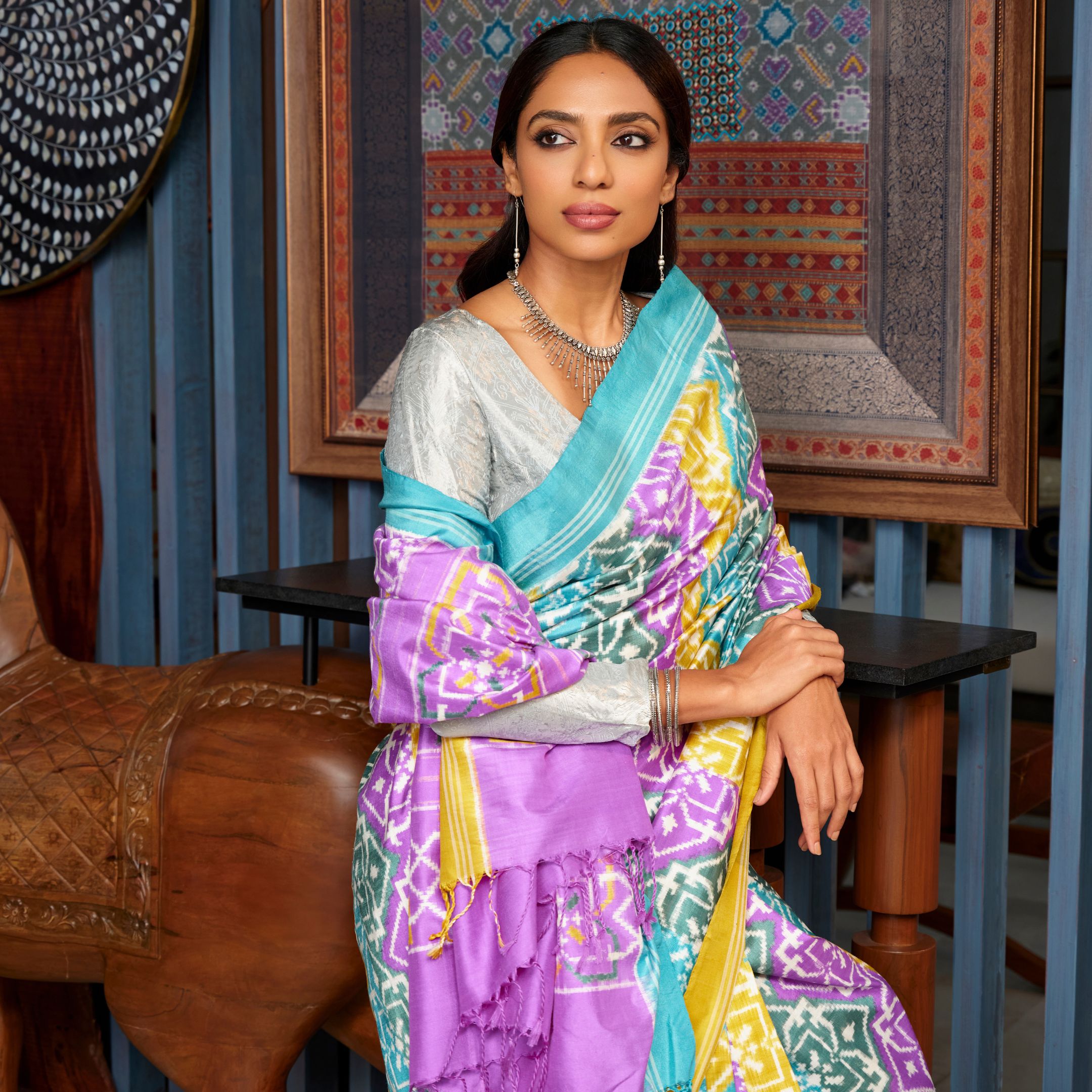
Her own relationship has evolved from distant admiration to an attempt to integrate it into her life, and at this shoot, Sobhita looks radiant as she changes into a double ikat sari in a shade of lavender, yellow, blue, and olive green. “I am in love with the Ponduru Khadi weave, at the moment. I’ve been exploring it since my wedding,” she says in a moment of pause in between the shots.

At the heart of her personal style lies a beautiful tension of heritage and modernity; embracing traditions and the future with equal respect. And in many ways, this is how Sobhita describes herself, as well: “I think of myself as being unapologetic about tradition and culture, while also wanting to be progressive. In that sense, I am the face of a modern India,’ she states. A fine appreciation Sobhita presents of herself—and us, for that matter, for aren’t we at the intersection of our customs and the future? “It’s about not subscribing to an absolute version of either,” she continues, “I like to be in the middle and find my groove.”

1
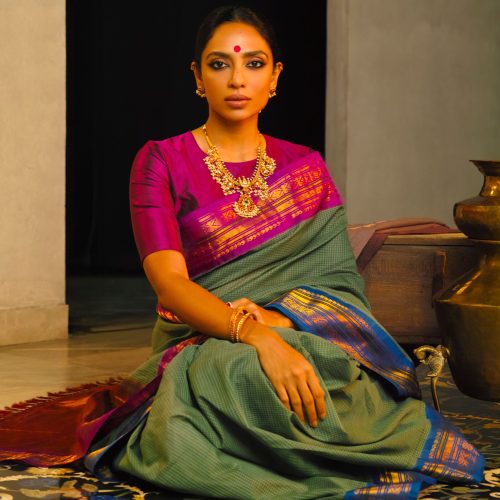
A rich Gadwal sari by Aadyam Handwoven. This weave hails from the Jogulamba Gadwal
district of Telangana, from the 18th century.
Sobhita leaves the room to change into a different sari, and emerges in a traditional Gadwal silk weave, with an elaborate border. She’s an image out of a painting, her hair tied back, a large, red bindi on her forehead. Behind the reserved appearance, however, is a woman who knows her mind and is unafraid to go after what she wants. “Every day I get to choose who I want to be,” she states. “I’m not overtly nostalgic about the past nor live imagining the future. The memories I like, I put on a pedestal. And the ones I don’t like, I’ve forgotten.”

Here is the modern woman, draped in tradition, embracing her culture, daring to dream, respecting the wisdom of the past. Though this, Sobhita celebrates Aadyam’s commitment to preserving and celebration the crafts of India. As Manish Saksena, Business Lead Aadyam Handwoven shares, “Aadyam has always stood for the people behind the loom, the cultures that shape our craft, and the traditions that continue to evolve. Sobhita is a woman of today who exemplifies this thinking with an innate sensitivity.”

The shoot for the day wraps up, and the saris are carefully folded into their boxes. The sun casts long shadows across the room, and as we say our goodbyes, the warp and weft remind us of the greatest fact: that we will leave, but the sari will live forever. 

6
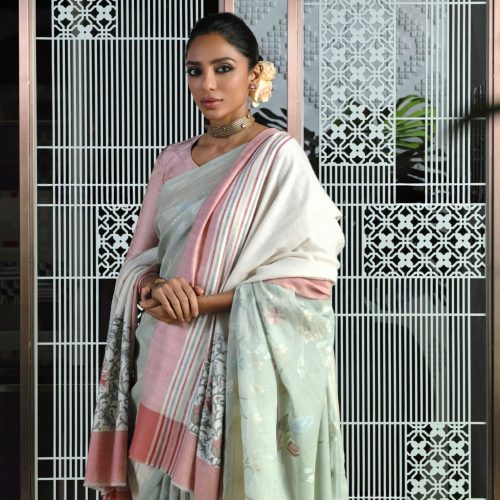
Sobhita in a Jamdani weave by Aadyam Handwoven. This weave is said to have
originated 2,000 years ago, in the Bengal region.